

Rethinking the Best Writing Programs: What Really Works
As reading reform sweeps the nation, one question continues to pop up across many Facebook groups: what are the best writing programs out there? The realization that writing is crucial not just in its own right, but also for reading success, is a welcome relief. But the answers given are…not the answer. More often than not, what’s recommended will actually end up causing greater confusion for kids and a bigger workload for teachers. Two things no one wants.
Let’s break down what’s so often recommended, the pros and cons of those recommendations, and the real solution.
Misguided recommendation #1
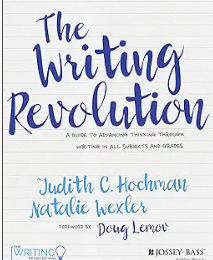
The Writing Revolution
Pros
It’s not a curriculum, so it works very well alongside your existing curriculum and structure. It breaks down into fine detail how to teach students to write well-developed sentences, beginning with the very most basic level and moving on from there all the way to full essays. The authors also stress the importance of explicit instruction through modeling and teaching sentence writing in the context of student writing.
The authors also give excellent teaching tips that are often overlooked. For example, that students “need to spend time hearing and reading complete sentences alongside sentence fragments and distinguishing between the two” (pg 27) first through oral activities, then in writing. As students today are so used to speaking and typing in short, text-like sentences, this is wise advice.
The key thing about The Writing Revolution, though, is that this work is meant to be done inside of content classes like social studies and science. This gives context and real purpose for the writing, and also serves as a formative check for understanding of content for teachers. This idea of writing for a real purpose is a core premise of this approach.
This work can also be embedded into the ELA block, of course, in tasks that ask students to respond to reading.
Cons
The book is long and takes a lot of time to implement. It’s also in-depth work, so going it alone could be very difficult to put into practice well, especially if this sort of work is brand new to a teacher. The authors do offer online courses, but cost an individual teacher nearly $1,000.
The writing is also very structured. Which means it’s also formulaic writing, where every type of response follows the exact same format. In addition, all of the writing is in response to a prompt. That is certainly one type of writing we need our students to be skilled in doing, but it’s not the only kind of writing students need to do. It also skips the very first step in the writing process: idea generation.
Misguided recommendation #2
Various TPT units
Pros
These purport to include everything you’ll need for writing for the whole year, from lessons to materials to assessments.
Cons
The two I see mentioned most often are watered-down copies of Calkins’s Writing Units of Study. I’m a big fan of the Units of Study, but they’re already highly misinterpreted, and when they’re very watered down as with these popular packets, even more of the crucial aspects of strong writing instruction are left out. That said, the format, lessons, and even lesson wording are quite similar. Year-long TPT units will typically cost about $100 per teacher.
The one-size-fits-all approach to these units means that, invariably, some students will be left out. Which means in order to meet students’ needs, teachers will have to do a great deal of revamping. Because they’re so watered down, lessons are often vague, leaving teachers to have to do a lot of work. This is the most common complaint I’ve seen on social media in reference to these units.
Revamping will also have to be done in light of state standards. Like boxed curriculum, TPT units are written for the masses, not specific standards. Many products say they align with specific state standards, but upon closer inspection, a lot is left out or doesn’t truly match. A lot will be missed without careful combing-through and reworking.
Misguided recommendation #3
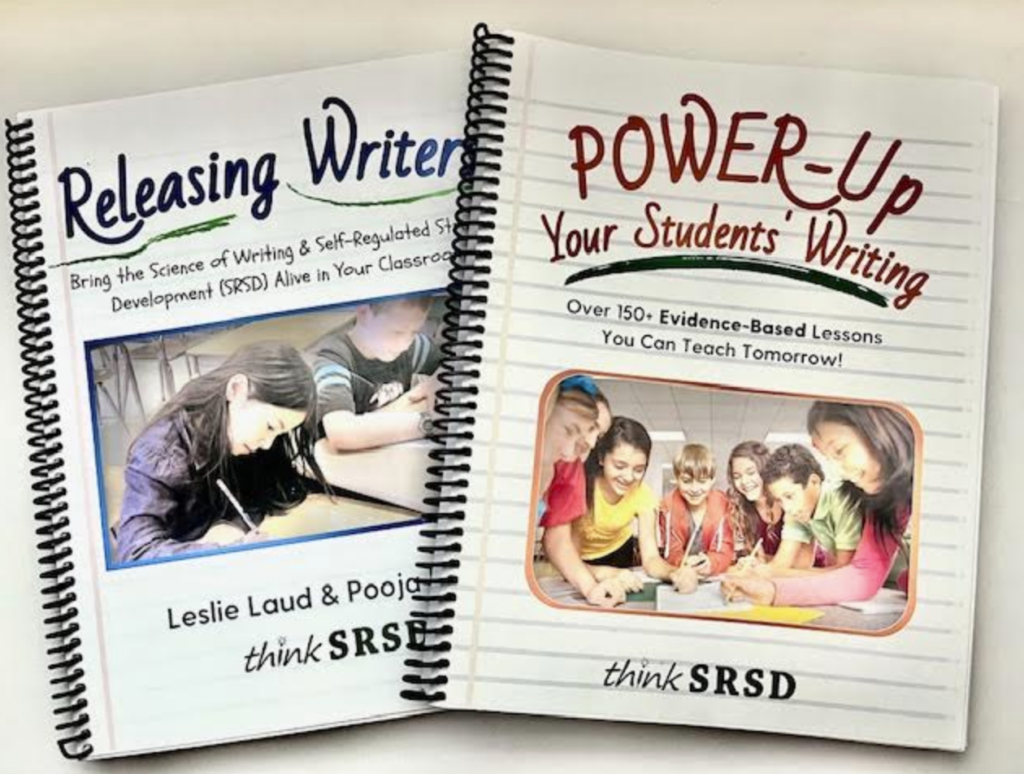
ThinkSRSD
Pros
Uses a gradual release approach where modeling the writing process is explicit. If you’re familiar with a writing workshop, this approach is extremely similar. The training shows teachers who are unfamiliar with modeling writing how to do it for a variety of grade levels. There is a Facebook group administered by the author of the resources for ongoing support. The author is very responsive.
This approach is also very evidence-based, and has been for many years. The original work was done by Steve Graham and Karen Harris back in the early 1980’s. They named it SRSD, and stands for Self-Regulated Strategy Development. The self-regulation part is big. This means that teachers embed positive self-talk in the lessons. Things like “I know what to do first,” and “I can do it.” ThinkSRSD simply branded the work of SRSD and now sells the materials and training to learn it.
This approach is grounded in sound instructional practices. It advises teachers to gather writing samples to preassess students in order to determine needs, incorporates a heavy amount of modeling, and walks students through strategy instruction of the entire writing process. It goes well beyond just sentence-level work. Feedback, student collaboration, and goal-setting are a big part of it. ThinkSRSD also includes a module about analyzing and assessing student writing as well.
While this approach follows a very structured framework, it’s not a script. Teachers still make a lot of decisions in response to students, and it’s all very flexible.
Cons
The course is about $200 and quite lengthy. The majority of it is a lot of examples of a teacher using shared writing to model the writing process.
There are many, many acronyms for teachers and students to remember. However, mnemonics are research-backed, helpful tools for struggling learners, as they are “procedural prompts that provide visual cues to assist students with the writing process.” (New Hampshire Journal of Education, 2014) Because of the mnemonics used to structure the work, writing is formulaic, with every type of writing following the exact same format, as is the case with The Writing Revolution.
The majority of the training and resources focuses on informational and opinion writing in response to content read class. Narrative writing, still an important genre to learn and still included in most state standards, is largely dismissed. It is relegated to a cursory piece of only one of the nine modules. Teachers will need to do some work to make sure to include narrative writing.
What do all of these approaches have in common?
Besides a monetary cost, they all share what experts like Joan Sedita recommend in some way:
- Time for writing
- Clear, explicit teacher modeling in transcription and content skills
- Assessment
- Feedback
- Peer-to-peer feedback
- Mentor texts as models
- Gradual release of responsibility
- Differentiation
Exactly what a strong writing workshop includes, as April Smith writes about in her book, Simplify Your Writing Instruction.
Which means, while several writing programs exist, none is actually really needed.
What do teachers need?
An understanding the writing process, clear and explicit teaching, a thorough understanding of your state standards, and a plan for bridging where students actually are to where you want them to go.
It means there is a lot to learn. And that takes time, practice, and a lot of learning about writing development and instruction. To start, check out this post on 5 keys to improving writing and this one on becoming a better writing teacher. Then keep going. Read The Writing Rope, How to Be a Better Writing Teacher, and We Do Writing. Binge-listen to the Getting Students to Write podcast. These resources will all give you a very solid foundation. Also be sure to check out all the training and resources from Keys to Literacy. Maybe invest in ThinkSRSD.
What writing instruction really takes
At the end of the day, it’s all about practice. It’s about getting over your own fear of writing, and rolling up your sleeves to just dig in. If you’re lucky enough to have a literacy coach in your building, partner with them! Analyze student work together. Put your heads together to plan lessons. Co-teach. Ask for feedback. If you don’t have a coach, reach out! I can help you with everything but the co-teaching part through virtual coaching calls. Seriously. I’m just an email away!
Writing is big and very complex. It’s not only easier with a thinking partner, it’s also a whole lot more fun!

Who is Coach from the Couch?? I’m Michelle Ruhe, a 25-year veteran educator, currently a K-5 literacy coach. I continue to learn alongside teachers in classrooms each and every day, and it’s my mission to support as many teachers as I can. Because no one can do this work alone. I’m available to you, too, through virtual coaching calls! Simply email me at michelle@coachfromthecouch.com or reach out for a coaching call!
And be sure to join my Facebook community–a safe, supportive environment (really–no blaming or shaming allowed!) where you can ask questions, learn ideas, and share your thoughts among other literacy-loving educators!


Add A Comment