

Teaching Kids How to Write a Summary for Nonfiction
In a previous post, I shared one of the easiest, most effective strategies for simplifying narrative summary writing for kids. If you haven’t read that post yet, please take a minute to do that, because I’m jumping off from there in this post. Here, I’ll share how that same idea can be just as easily applied to teaching kids how to write a summary for nonfiction texts.
As with narrative summary writing, creating a gist statement is still key.
But with nonfiction, text structure matters a whole lot. Understanding what type of structure the text mostly is (the superstructure) lays the foundation. Superstructure refers to the overall, big picture structure, as explained in Shifting the Balance 3-5.
A big clue to the text structure is often the title. Ensure kids are really paying attention to that, especially if there’s also a subtitle.

From there, while reading a text and especially after reading, it’s important to think about 3 main questions. These are essential for nonfiction summary writing:
- Is the author comparing two or more things?
- Is the author explaining a problem and providing a solution?
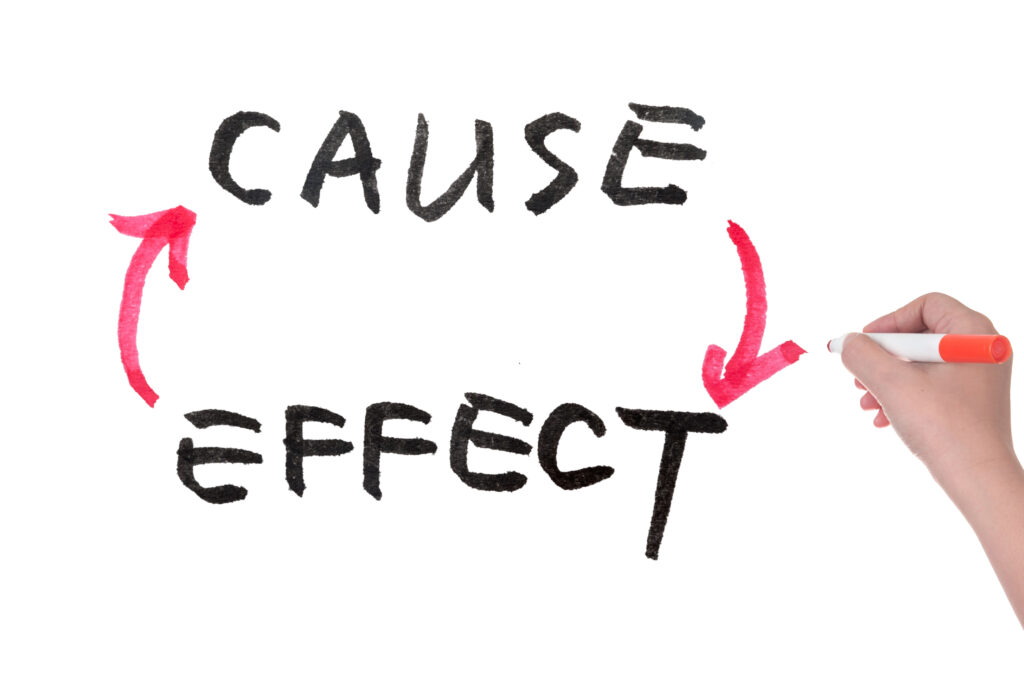
- Is the author telling what caused something to happen?
Notice I didn’t mention the structures of description or sequence. While yes, kids will be asked questions on state tests where these structures are the answer to a multiple choice question, let me explain why I don’t spend much time with them.
Nonfiction text structure that guides summary writing
Dr. Wijekumar, a researcher out of Texas A & M University, has done a lot of work around text structure’s importance. In her training around the Knowledge Acquisition and Transformation Strategy (KAT), I learned that it’s far more effective to focus on just three text structures for nonfiction: compare and contrast, problem and solution, and cause and effect.
Sequence is of course another common structure, but more often than not, Dr, Wijekumar says that sequence is actually cause and effect. And if you really think about it, it makes a whole lot of sense.
In other words, it’s more that an author is explaining how one thing led to another (causation), which is a sequence of events. This is especially true with just about any social studies or science text.
Another text structure caveat:
Dr. Wijekumar also advises to steer away from description, as really everything can be “description.” Description is a very vague term. It’s exactly that vagueness that often leads kids to pull in any old details. There’s just no real direction for kids. (Side note: if you have the chance to do Dr. Wijekumar’s KAT training, I highly recommend it!)
Dr. Wijekumar also wisely advises (in her KAT training) that we’d rather kids get one question “wrong” on a multiple choice test about text structure, but all the other questions centered on the main ideas of the text correct. So rather than spending time just naming “sequence” or “description” as the structure, it’s far better for kids to understand the bigger ideas the author wants the reader to know. It’s where the superstructure comes in.
It’s only the very early level texts, like in kindergarten and first grade, that nonfiction truly is just describing “all about” a topic. These are more just simple knowledge-building texts vs getting-at-very-big-ideas-texts. But at about the mid-end of first grade as texts become more sophisticated, authors gravitate toward a larger purpose. This is where asking those three key questions as a reader comes into play.
It’s key to teaching kids how to write a summary for nonfiction.
A note of caution on text structure:
In authentic texts above the earliest levels, whether that be a read aloud, a higher leveled text, an actual article from an online or print source, a text from content studies, etc, there will be a mix of structures within a text. This is why thinking about those three questions is so important–the answer will tie together how the author organized the text to help them arrive at their purpose. Which is exactly what we want students to do as writers themselves. (But that’s a different post.)

There also won’t be super obvious key words that jump out in an authentic text. That really only occurs in very contrived texts expressly written to identify text structure. Often, this is what you’ll find on TPT. The goal of reading anything isn’t to identify how the author organized it. The goal is to understand what the author’s purpose is–the big ideas they want the reader to walk away with.
Tim Shanahan cautions us that “For the most part, text structure pedagogy tends to neglect the underlying purposes for the rhetorical structures that it emphasizes.” If we always give kids these types of contrived texts used only to identify the text structure, we don’t set them up for success when it’s time to do the real work of arriving at the big ideas conveyed through the structure in a more complex grade level text.
“The trick is to not allow the structure to sidetrack meaning.”
The hardest work here is reading and understanding the big ideas of the text, through the lens of the overarching structure. After putting it all together in this way, a gist statement to sum it up can be created, and that gist statement drives the supporting details. This is the secret sauce–it’s what will most help kids understand what the relevant key details are.
And that’s the key to teaching kids how to write a summary for nonfiction!
You’ll still model, use shared writing for “we do” practice, and provide feedback as kids learn to do this work of writing a summary for nonfiction themselves, of course.
Begin with the gist statement guided by the text structure, and you’ll have teaching kids how to write a summary for nonfiction in the bag!
So, fellow teacher: where this coming week could you provide an opportunity to try this out with nonfiction summary writing? I’d love to hear how it goes!

Could you use a partner in strengthening your literacy instruction? I’m here for you! Because no one can do this work alone, I’m available for virtual coaching calls. Simply email me at michelle@coachfromthecouch.com or reach out for a coaching call!
Or, consider joining my Facebook community–a safe, supportive environment (really–no blaming or shaming allowed!) where you can ask questions, learn ideas, and share your thoughts among other literacy-loving educators!
Who is Coach from the Couch?? I’m Michelle, a 25-year veteran educator, currently a K-5 literacy coach. I continue to learn alongside teachers in classrooms each and every day, and it’s my mission to support as many teachers just like you as I can.



Add A Comment